“A fast two-player grid duel where every move cuts space and claims territory.”
BLOKZ


• The game is built around sharp decision-making, where every move shifts control of the board.
• It uses simple rules but creates deep strategic possibilities through player interaction.
• The game rewards precision, timing, and the ability to anticipate the opponent’s intentions.
• No two matches play the same small choices create entirely new patterns and outcomes.
• The board begins neutral, but quickly transforms as players carve out territory and challenge each other’s space.
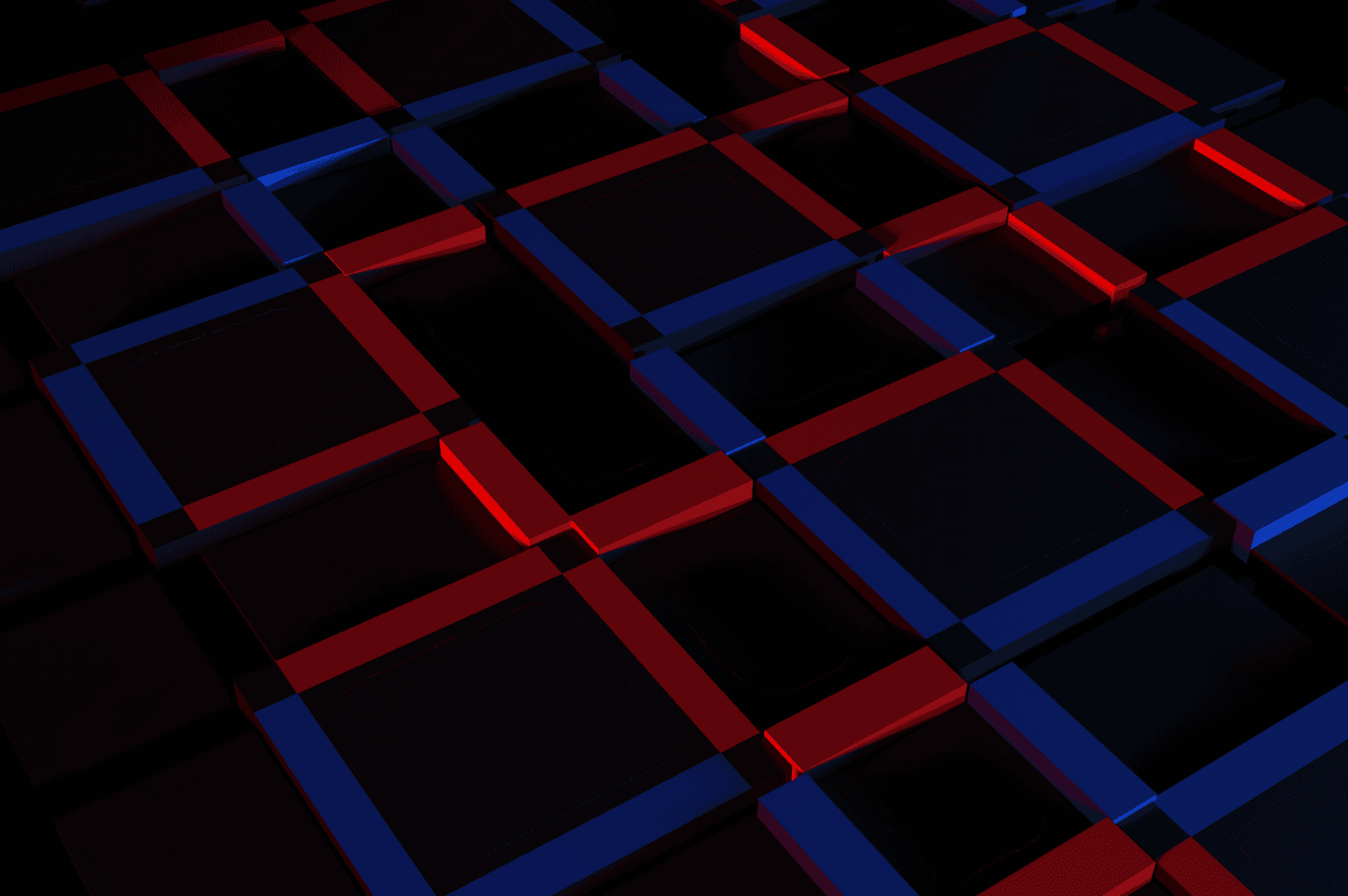


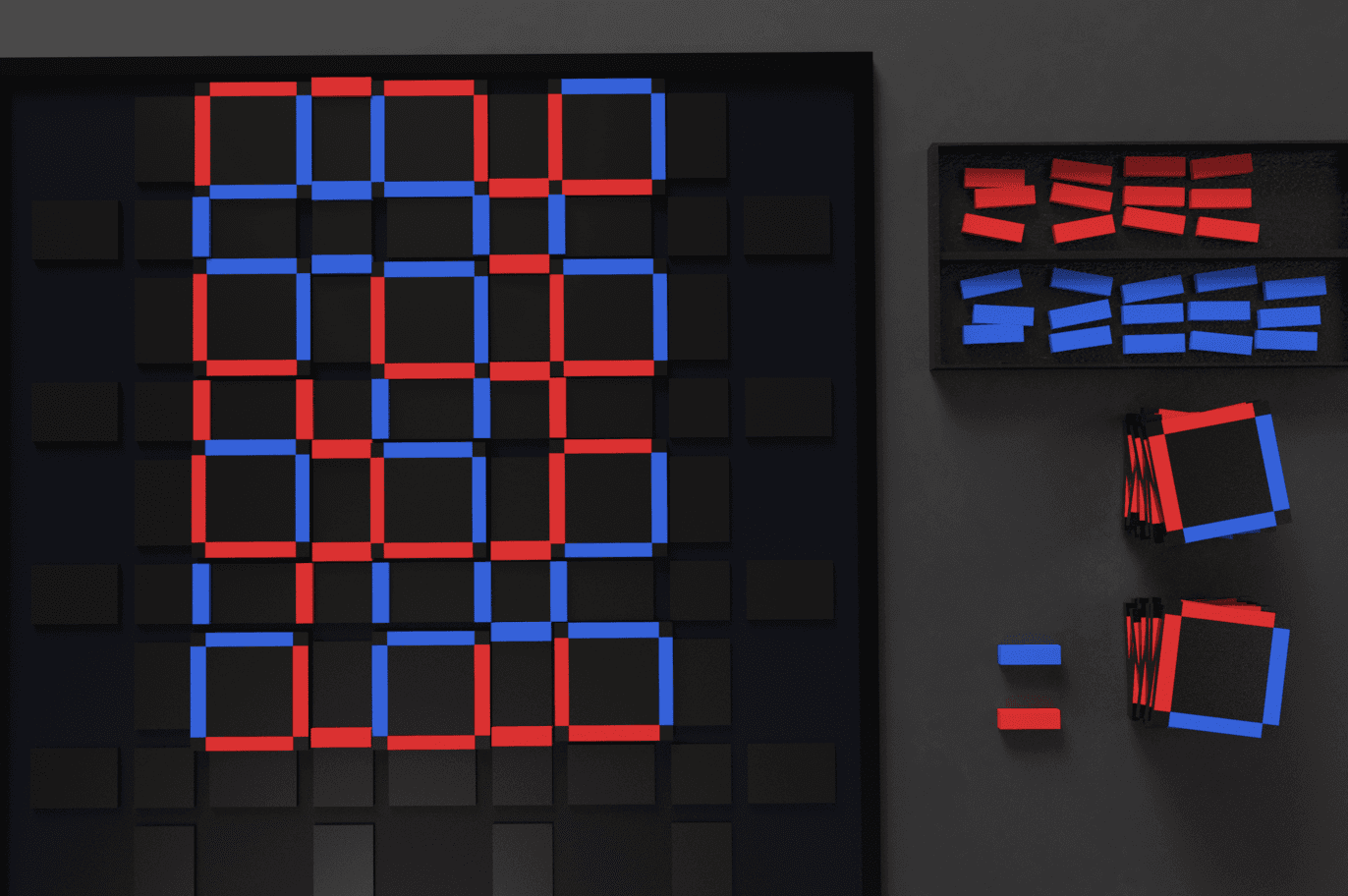
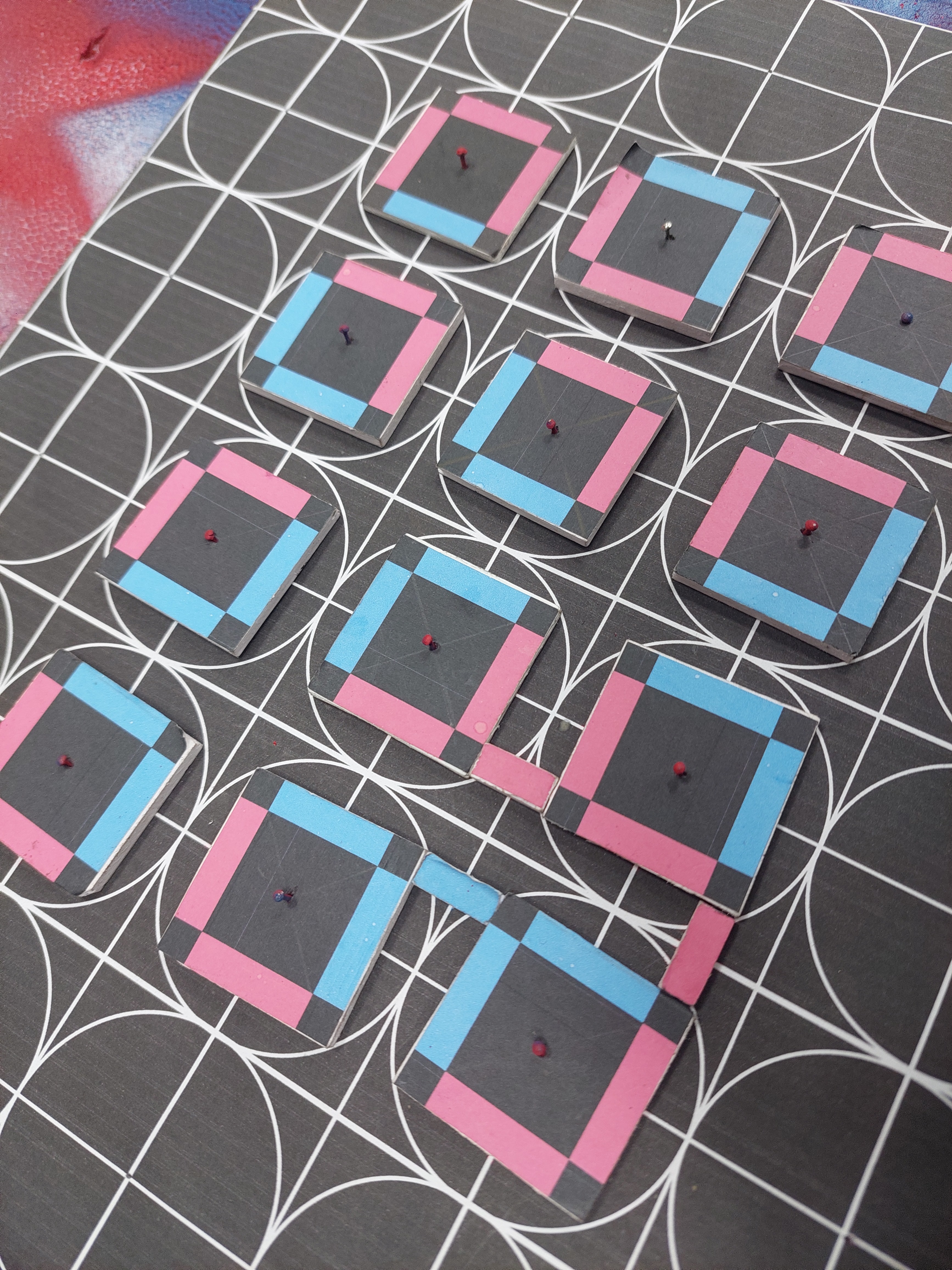
The board is designed as a clean, minimal grid made of small square slots that neatly hold each piece in place. Its dark base creates a strong contrast, making the red and blue pieces easy to see and track during play.
The layout is organized and intuitive, helping players focus on strategy without distraction. Overall, the board feels sharp, stable, and ready for competitive, thoughtful gameplay



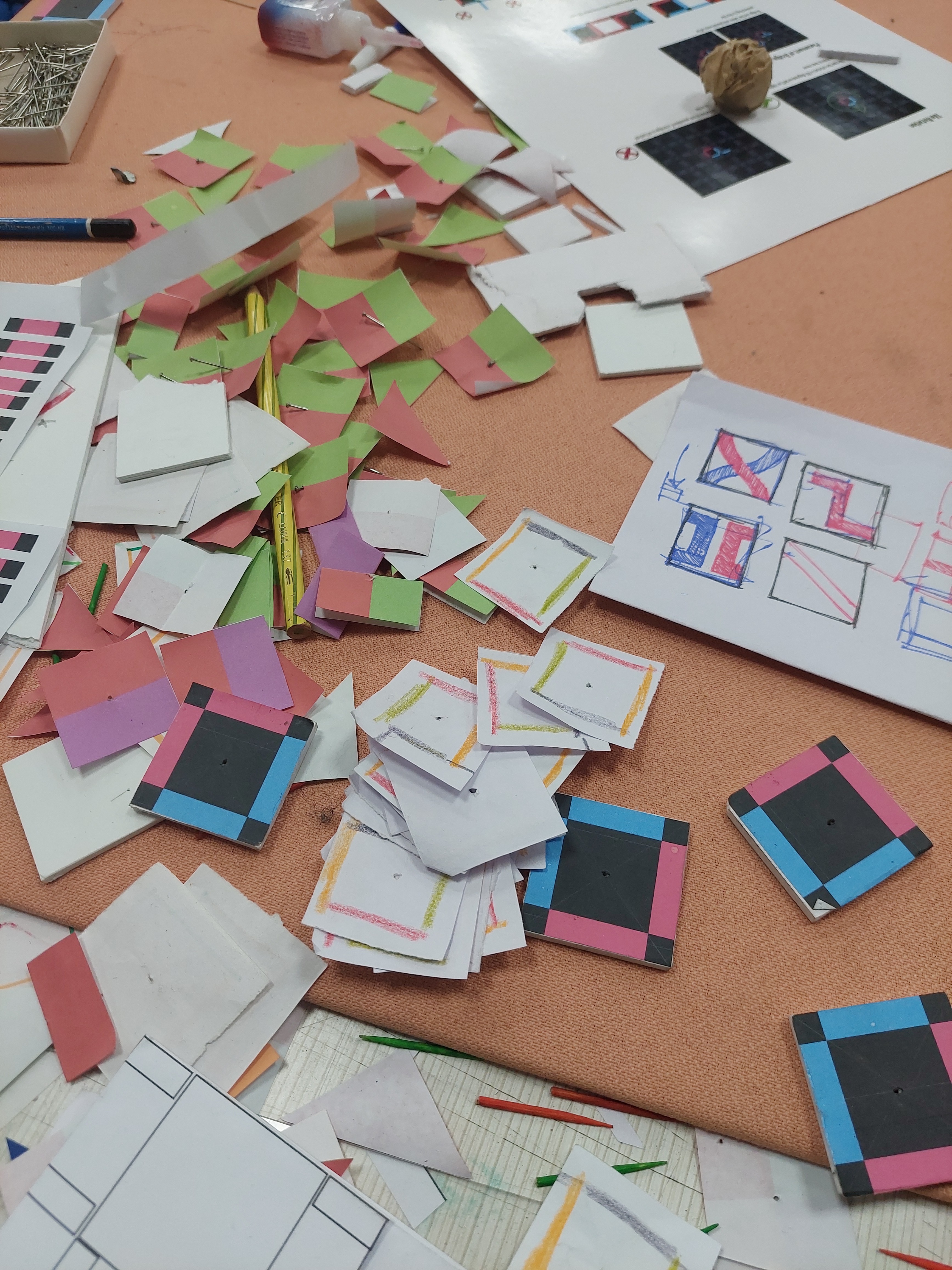
We started the project with the mission to build a game driven purely by mechanics and strategy. Our first focus was understanding the fundamental questions: How should the game work? How many players should it support? Should it follow a story or remain abstract? These early considerations helped us define the direction before any rules or visuals were created.


Through multiple brainstorming sessions, we explored different formats—multiplayer systems, narrative-driven structures, and even thematic settings.
Eventually, we realized that the game was strongest when kept minimal and competitive.
This led us to establish it as a two-player, abstract strategy game where clarity and precision mattered more than thematic storytelling.
These foundational decisions became the backbone for the mechanics that followed, guiding every prototype, test, and refinement throughout the development process.




BLOKZ
“A fast two-player grid duel where every move cuts space and claims territory.”
• The game is built around sharp decision-making, where every move shifts control of the board.
• It uses simple rules but creates deep strategic possibilities through player interaction.
• The game rewards precision, timing, and the ability to anticipate the opponent’s intentions.
• No two matches play the same small choices create entirely new patterns and outcomes.
• The board begins neutral, but quickly transforms as players carve out territory and challenge each other’s space.
• The game is built around sharp decision-making, where every move shifts control of the board.
• It uses simple rules but creates deep strategic possibilities through player interaction.
• The game rewards precision, timing, and the ability to anticipate the opponent’s intentions.
• No two matches play the same small choices create entirely new patterns and outcomes.
• The board begins neutral, but quickly transforms as players carve out territory and challenge each other’s space.
The board is designed as a clean, minimal grid made of small square slots that neatly hold each piece in place. Its dark base creates a strong contrast, making the red and blue pieces easy to see and track during play. The layout is organized and intuitive, helping players focus on strategy without distraction. Overall, the board feels sharp, stable, and ready for competitive, thoughtful gameplay
The board is designed as a clean, minimal grid made of small square slots that neatly hold each piece in place. Its dark base creates a strong contrast, making the red and blue pieces easy to see and track during play. The layout is organized and intuitive, helping players focus on strategy without distraction. Overall, the board feels sharp, stable, and ready for competitive, thoughtful gameplay
We started the project with the mission to build a game driven purely by mechanics and strategy. Our first focus was understanding the fundamental questions: How should the game work? How many players should it support? Should it follow a story or remain abstract? These early considerations helped us define the direction before any rules or visuals were created.
We started the project with the mission to build a game driven purely by mechanics and strategy. Our first focus was understanding the fundamental questions: How should the game work? How many players should it support? Should it follow a story or remain abstract? These early considerations helped us define the direction before any rules or visuals were created.
Through multiple brainstorming sessions, we explored different formats—multiplayer systems, narrative-driven structures, and even thematic settings.
Eventually, we realized that the game was strongest when kept minimal and competitive.
This led us to establish it as a two-player, abstract strategy game where clarity and precision mattered more than thematic storytelling.
These foundational decisions became the backbone for the mechanics that followed, guiding every prototype, test, and refinement throughout the development process.